What Is a Art Form That Tells a Story to the Speech and Actions of Characters
Past definition, narrative fine art is the type of visual art that tells stories. This description is highly figurative of course, since the traditional visual arts do not have a temporal dimension needed for actual storytelling. Painting and sculpture, as the nigh common classical art forms, operate in spatial terms. Rather than having to read a text word by discussion, the viewer needs simply to expect at the painting before him/her and to "read" the epitome. This apparent departure between exact narratives and the i told past pictures could also help us sympathize the declared mediating office of art in our past (and present, also).
1 Prototype = one thousand Words
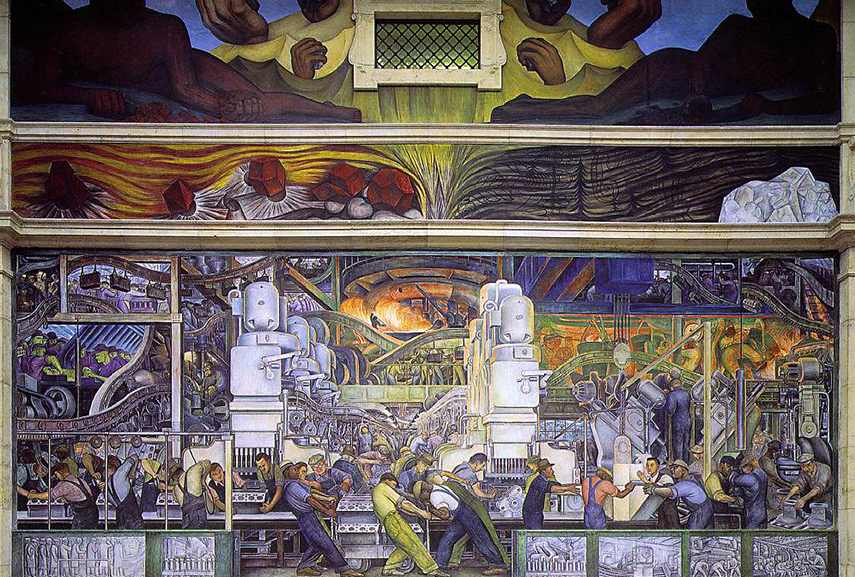
And so why do we tell stories, in the first place? The deeper we dig into the past, the more politically engaged the narratives become. For all that we know, our history is but what the winners have aimed to tell us, much rather than what the objective truth was like. Thus, neat historical narratives were told in order to maintain the power of the ruling grade, to instruct and articulate the masses, only also to inform the future generations. Quite ofttimes, the aristocrats employed painters rather than writers to tell their stories for them. One of the chief reasons why this method was of import is the number of illiterate people, which was much greater in the past than it is now. Just apart from that, it is besides the unique ability of images to instantly interpret a message. Therefore, information technology was very mutual to have a painter piece of work for the male monarch or a religious patron and illustrate particular subjects, simultaneously ignoring some of their aspects that might non exist in favor of the ruler or the church. Narrative art conveyed the messages of compassion, of fear, or of a distinction between right and wrong, alluding to the preferred type of beliefs and evoking a sense of self-regulation in the viewer.[1]
Narrating History
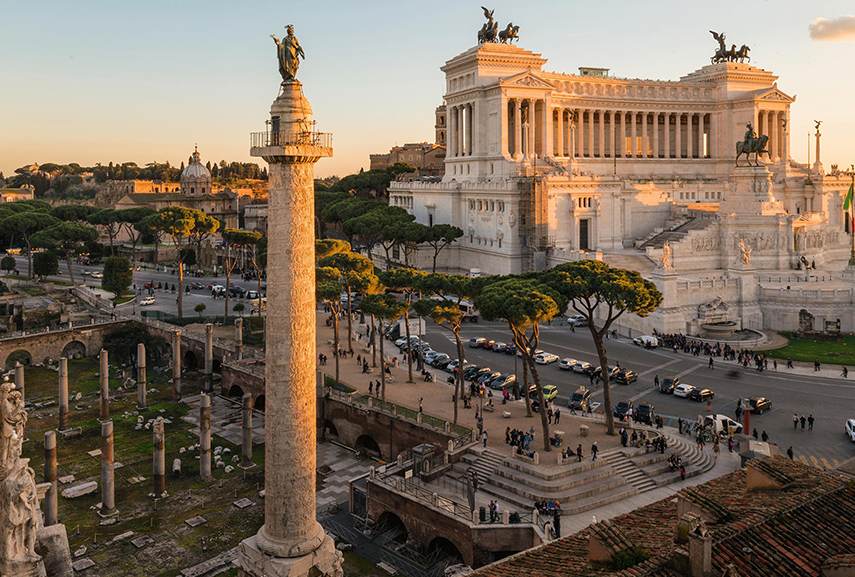
Most of the visual narratives depend on the fourth dimension of their creation and the cultural context - different civilizations pursued diverse manners of "voice communication". In ancient Rome, at that place was a particular architectural format intended to exist read as a book - a triumphal cavalcade. Information technology is a cylindrical form, known for an engraved story that literally revolves around the column, starting from the bottom and continuing towards the top like a spiral tracing its circumference and top (the most famous one today is Trajan'southward column). Since the story becomes less articulate as its sequences reach greater heights, historians presume that the Romans built additional screw staircases that served every bit a platform for the spectators.[2]
Days, Months and Years in a Single Painting
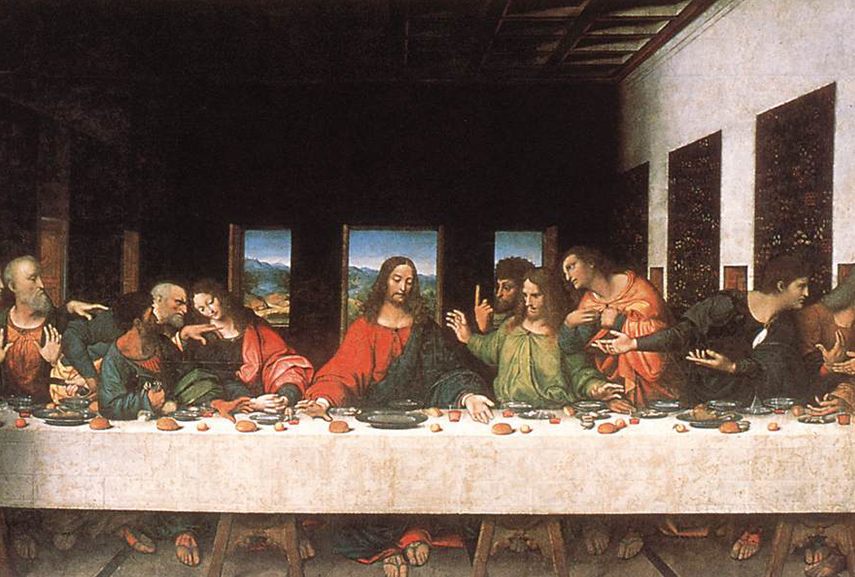
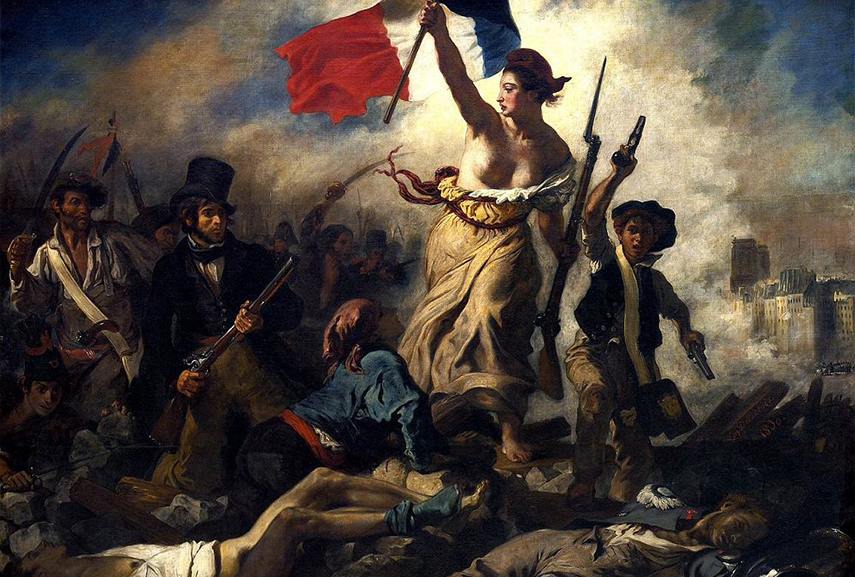
In the following centuries, this exhaustive and quite direct interpretation of book chapters was existence gradually modified into simpler versions. Painters and sculptors aimed to make pieces that tell the entire story in a unmarried glance. Quite often, specially during and after the Renaissance, the narrative was emphasized by the artist's technical tactics - a specific utilise of lite and shadow, choice of a medium, etc. Virtually of the cracking masters paintings operated in this manner. The paintings would sometimes depict the protagonist(southward) or segments of events in several unlike stages in a successive manner. Such is Michelangelo's ceiling of the Sistine Chapel, for example. Still, the most typical narrative paintings made after the Renaissance depicted a unmarried scene, composed in an elaborate, withal often non-objective, romanticized manner (even when naturalist in fashion). One of the nigh famous examples is Freedom Leading the People by Eugene Delacroix, a painting that many would regard every bit his masterpiece. It represents the events that marked the Three Glorious Days of the July Revolution in French republic. The painting is filled with dumbo content, semi-chaotic but with a bright message. The key effigy is an allegory of liberty, depicted as a dominant adult female leading the mass; the rest of the characters correspond various types of people who we all benefit from the revolution, regardless of their social and economic status (at to the lowest degree that is how Delacroix saw it).[3]
Everyday Life in Pictures
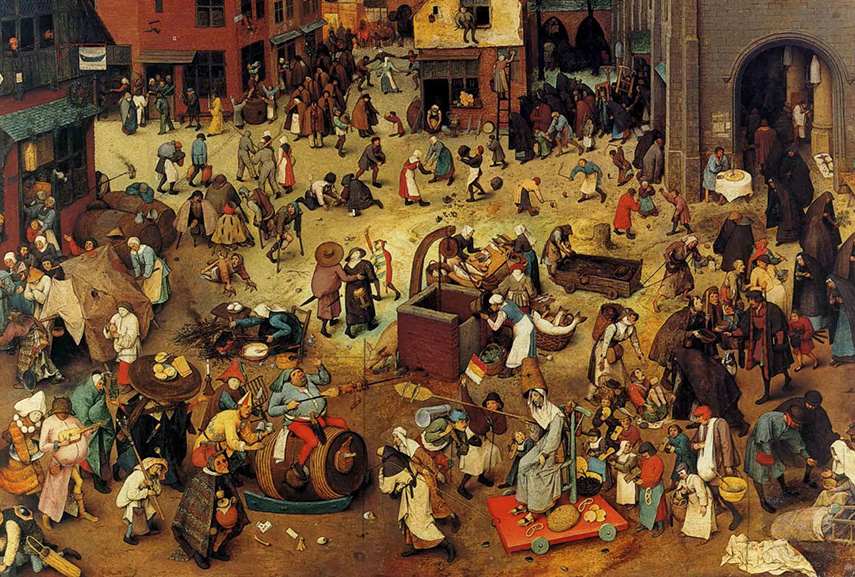
It is also of import to know that narrative art was non only limited to history painting. The emergence of Reformist church building and the reinforcement of genre painting that followed were major contributors to the diversified plethora of narrative fine art equally we know it today. Telling the anecdotes of ordinary people, whether politically charged or not, became i of the chief subjects of European art in the by few centuries. This type of narration remains popular even today. It was always modestly uplifting, feeding the spirit of people as they enjoyed remembering the footling things and joyful activities from their day-to-solar day lives.
How Wide is the Scope of Narrative Fine art ?
Up until the tardily 19th century, possibly every artwork was, more than or less, inspired by a certain narrative or in service of i. With the advent of the Mod historic period, art was no longer controlled by patrons, and its independence was alleged several times and on unlike occasions. The way that art transmits a message became increasingly complex, and dramatically different than before. Ascendant fine art was the one that was liberated from the need to serve a purpose. It was being produced for its own sake (l'fine art pour fifty'art), beingness near assimilated with aesthetics, discrete from whatever implicit narratives. The other mode around narratives was through the art of historical avant-gardes, which pursued a sort of critical "non-fine art" or art of the meta-medium (ready-made)[4]. However, now that it is in our historical by, it is difficult to say that Mod art does non accept a story of its own. Even if it is not representational or metaphorical, it is almost impossible for fine art to escape the estimation of the viewer. Moreover, art is stuck in the maze of its own cultural value, which ultimately makes a non-narrative seem like just another kind of narrative (on the other mitt, we may fence that there is no such affair as not-aesthetics as well). Art has always, fifty-fifty if non-voluntarily, reflected the mood of the era - and that makes it almost inseparable from narratives.[five]
Art That Does Not Tell Stories
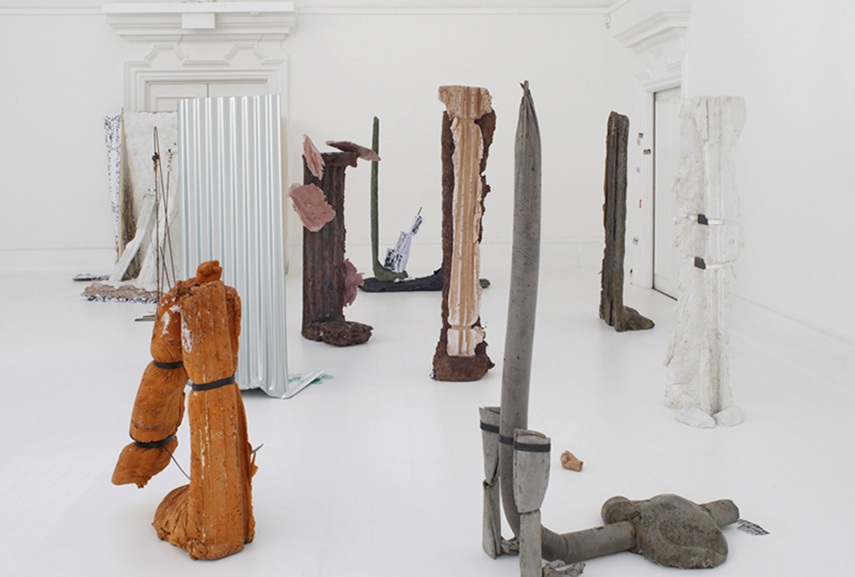
However, at that place is a major deviation betwixt work that is created with an intent to deliver a certain story, and the one that operates at a different level of human perception. This is probably the primal to sorting art in dissever categories. We tend to acquaintance the former with artworks made in the past and the latter with post-conceptual and contemporary art. In this regard, Modernism, which to be fair is probably a crossover between the two, is withal a scrap closer to the commencement category. This is because Mod art (in a really full general significant of the term) was withal vaguely dependent on the narrative in its endeavour to negate it. For this reason, and from today's standing point, it seems that contemporary art is the first to truly have the power to become across the narrative. The genres that emerged in the 2nd half of the 20th century helped produce an society that relies on the bear upon rather than the cerebral response. Instead of analyzing what fine art has to say, the common contemporary art viewer is concerned by what it tin can exercise.[6] This goes manus in paw with the kind of artworks characteristic for the late 20th and the 21st century - immersive installations, performances, digital works. Simply even the traditional art forms, sculpture, cartoon and painting, seem to re-invent themselves in this era (but take a look at this year's Turner Prize laureates, for instance). If there is a message hidden behind the artworks, it is ofttimes obscure, distant or secondary.
Narrative Fine art in 21st Century
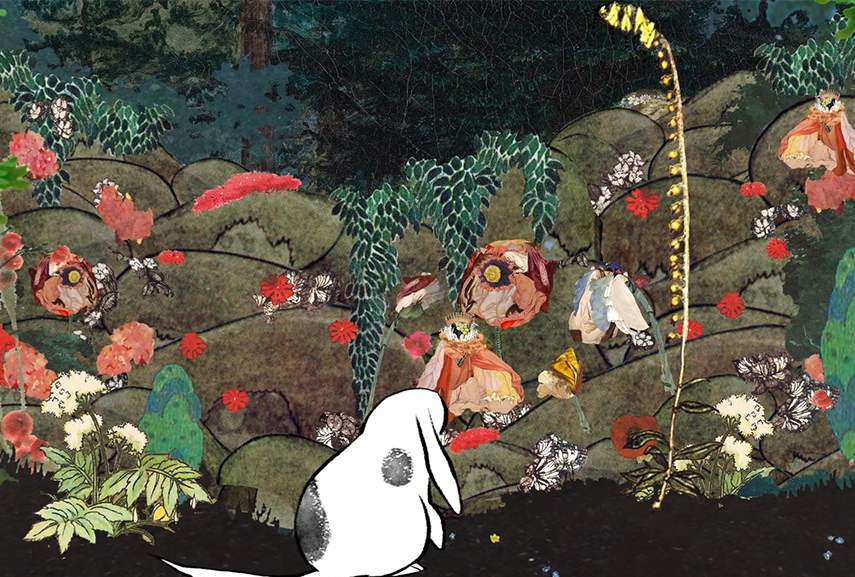
All of this does non mean that there is absolutely no gimmicky art that functions as a story-teller, of form. One of contemporary fine art's favorite narrative mediums is video, as it serves as an ideal amanuensis of the present-day aesthetics, being conspicuously applied at the aforementioned fourth dimension. Nonetheless, the classical mediums however prove to be only as operative. Interestingly, the cause of story-telling has not inherently changed either. Art lends itself to the revolutionaries, socially-engaged movements and people who want to alter the one-dimensional outlook on history (the Black Arts Movement, Afrofuturism, Feminism, etc.) - but it is still often used equally a tool. It is merely the patrons who have inverse. Instead of serving the leaders with bad reputation, narrative art at present seems to be in the hands of the people. It now aims to criticize and to protest, instead of submit to the authorities. In what seems to exist the contemporary alternation of genre painting, narrative art tells intimate stories and personal experiences, creating a familiar image that the public tin can relate to. In a more poetic sense, narratives in gimmicky fine art speak of imaginary worlds or alternate versions of future (a few of them bright, but most of them dystopian and dark, I'thousand afraid).
References:
Featured images: Hieronymus Bosch - The Garden of Earthly Delights ( 1490-1510), detail; Michelangelo - Sistine Chapel ceiling (1508-1510) and The Final Sentence (1536-1541); Detail from Trajan's cavalcade where two Roman auxiliaries present Trajan with severed enemy. All images used for illustrative purposes only.
vickeryhiciandold.blogspot.com
Source: https://www.widewalls.ch/magazine/what-is-narrative-art
0 Response to "What Is a Art Form That Tells a Story to the Speech and Actions of Characters"
Post a Comment