Why Uploaded File Layer Not Appearing in Revit
Many SketchUp projects somewhen make their way into other programs for detailing and documentation. Conversely, projects from these same programs detect their manner into SketchUp for better visualization, collaboration, and to ameliorate advice. Revit is a program often needed to deliver construction documents and permit sets for many big compages projects. SketchUp models tin can transition to or from Revit projects in a diversity of ways - the best way for your projection is dependent on the project'due south deliverables and goals. This commodity focuses on several ways 1 tin can transition from SketchUp to Revit and Revit to SketchUp.
Table of Contents
- SketchUp to Revit: Approaches and Workflows
- "In-Identify" Component Use Cases
- "In-Place" Component Workflow
- SketchUp as a "Link" Utilise Case
- SketchUp every bit a "Link" Workflow
- SketchUp as an IFC Export Utilize Case
- SketchUp as an IFC Export Workflow
- Revit to SketchUp: Approaches and Workflows
- Revit to SketchUp Use Cases
- Revit equally a DWG Export Workflow
- Revit equally an IFC Export Workflow
- Revit to SketchUp: Extensions to Consider
SketchUp to Revit: Approaches & Workflows
SketchUp to Revit All-time Practices
- An organized SketchUp model is key to any successful workflow
- Because it is not guaranteed that Revit's importer is upwards to date with the latest SketchUp version, you tin "Save As" your SketchUp model downwardly a version at least ane year before your Revit Version (i.east. if you are using Revit 2021, save your SketchUp model as version 2020)
- Understand your deliverables and goals - the all-time transition method will depend on your end goal or deliverable
Master Approaches
We have targeted 3 main approaches that a user tin apply to bring SketchUp assets into Revit. These approaches apply some of the native features available in both SketchUp and Revit.
SketchUp as an "In-Place" Component
This arroyo volition permit a user to use a SketchUp model equally an "In-Place" component in Revit. As an "In-Place" component, Revit family categories tin can be assigned and changed. Additionally, an OmniClass Number can be assigned for scheduling and keynoting.
"In-Place" Component Use Cases
SketchUp for Concept and Schematic Pattern - SketchUp is used for concept and schematic design and the model is used as a reference in Revit to create native Revit walls, floors, and roofs.
SketchUp for Unique or Custom Elements - SketchUp is used to create unique or custom objects that are difficult to create natively in Revit (e.thousand. Stairs, characteristic walls, built-ins). The SketchUp model is placed in the Revit projection nether the correct family category.
3D Warehouse for Avails - 3D Warehouse is a not bad resource for model elements that may non be available within Revit (e.g. furniture, casework, and light fixtures). These SketchUp components are designated in Revit under the correct family unit category.
"In-Place" Component Workflow
Within the Revit projection, select the Compages Tab > Component Drop-down > Model In-Place... and select the Revit Family type you desire to assign (e.g. mass, generic family, furniture). Adjacent, select the Insert tab > Link CAD... and select the SketchUp file.
One time completed, the SketchUp model is at present an "In-Place" component in your Revit projection.
Every bit an "In-Identify" component, you are able to…
- Tag entities
- Input "Identity Data" (Select Family → Edit Type)
- Use cut in plans, sections, and elevations
- Filter by Revit family type
- Control and override graphics at a family unit level
- SketchUp'southward tags will become the link'due south "layers" that can exist controlled with Revit's visibility graphics
To use the SketchUp "In-Place" component as a reference to create native Revit assembly families and assemblies, similar in the "Concept and Schematic Design" use case, there are 2 options:
"Model past Face" Method (Revit Walls and Roofs only)
In the Model by Face method, the user will use Revit'southward native "Wall by Face" or "Roof past Confront" feature to create a Revit assembly from a SketchUp face.

"Trace" Method
In the Trace method, a user will depict with Revit's various object creation tools and snap to the points and line work provided by the SketchUp "In-Place" component. Be aware Revit will but snap to the points associated with a Revit Level for this method.
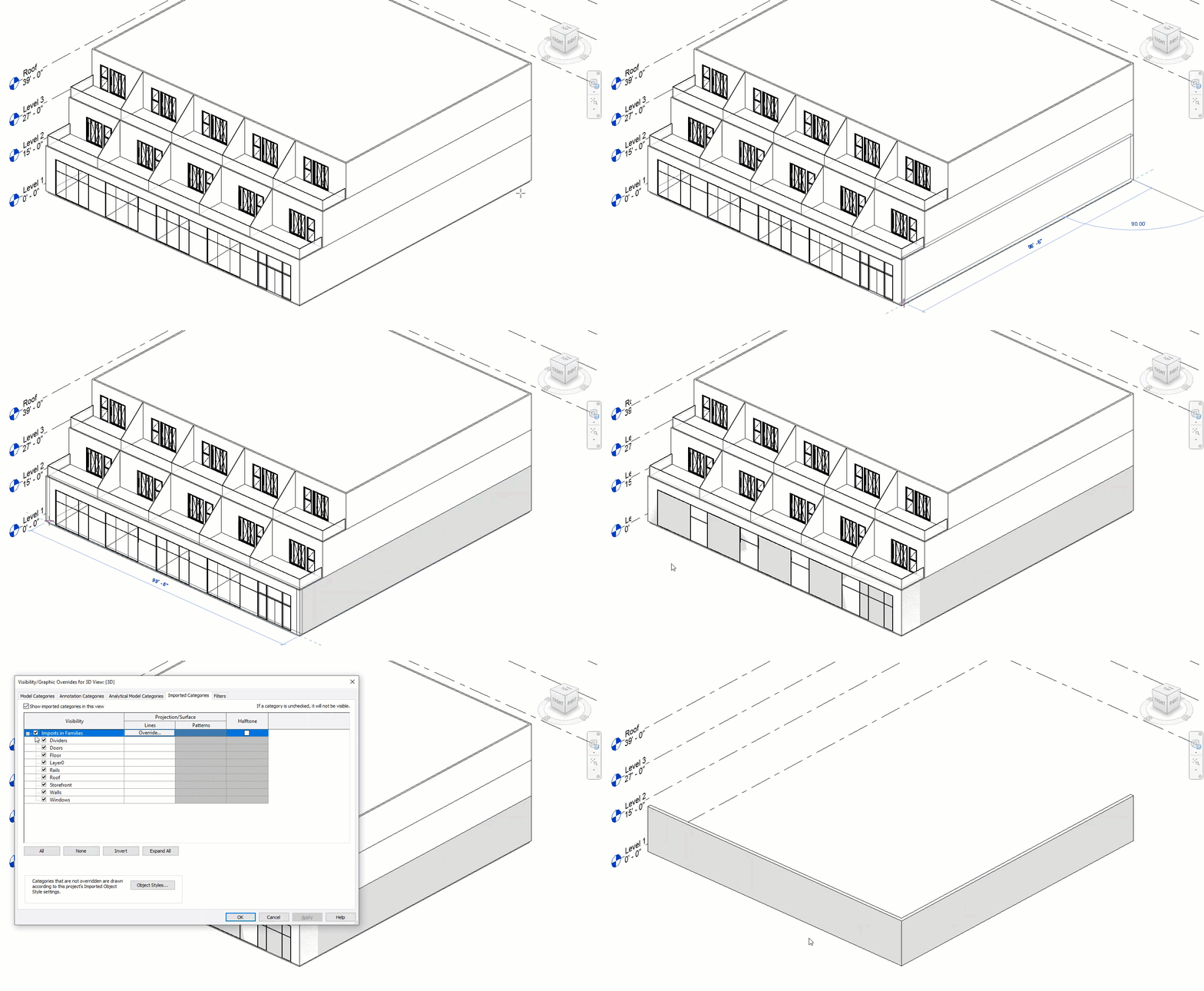
SketchUp equally a "Link" in a Revit Project
This arroyo is primarily used when needing to visualize SketchUp models as contextual elements inside Revit. This will allow for the visualization of highly detailed context elements while leaving these elements separate from the Revit project (contextual buildings, streetscapes, terrain, article of furniture layouts, etc). This can also be used every bit a means of collaboration between disciplines.
SketchUp as a "Link" Use Case
SketchUp for Context
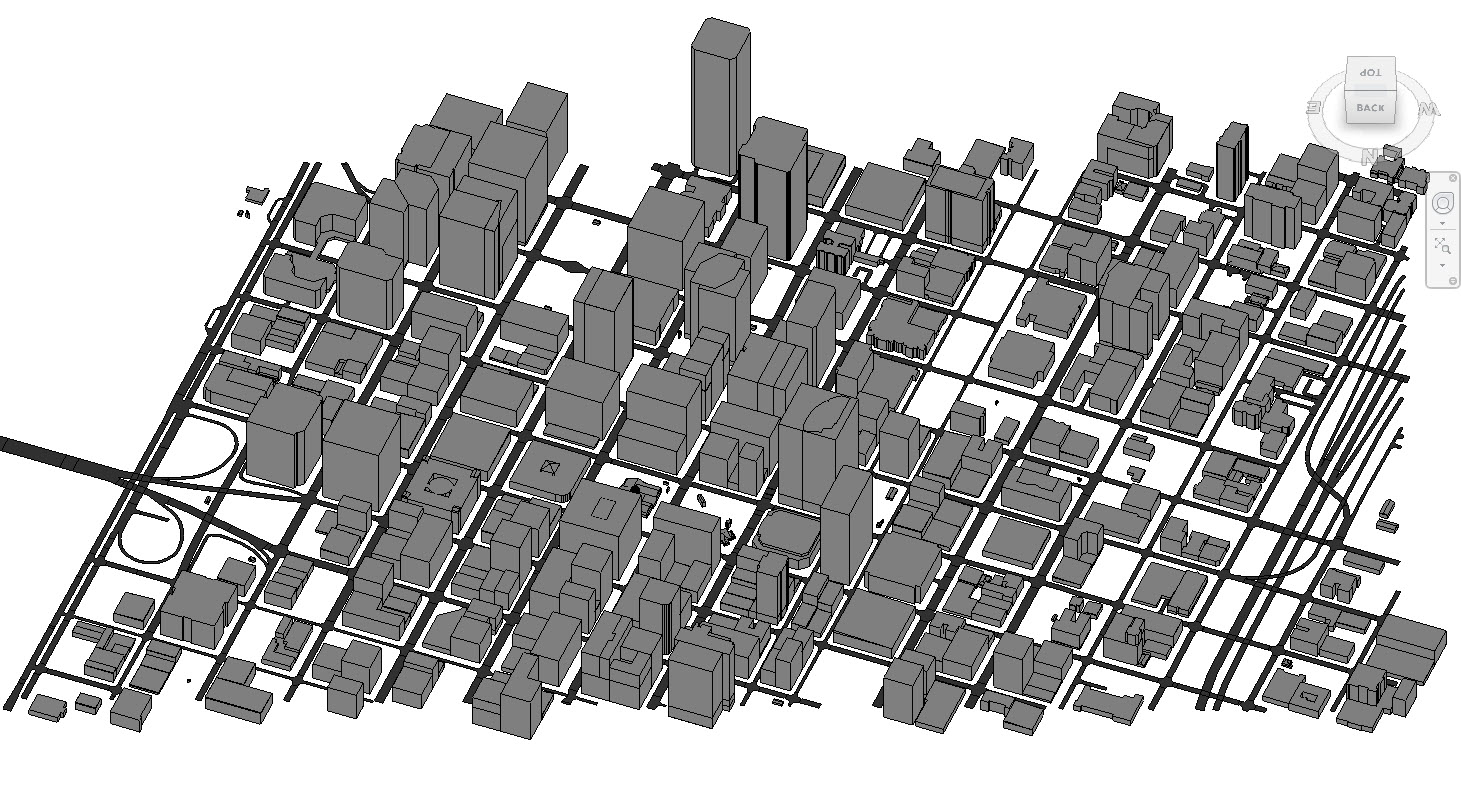
SketchUp is often used to create detailed site models or context models. The SketchUp model is used aslope the Revit model serving as context in the projection. The result tin can exist used for site and scoping plans, renderings or for 3D views when there is a need to show additional urban context, detailed next structures, or infrastructure on a large site.
SketchUp as a "Link" Workflow
Within an open Revit Project, select Insert > Link CAD (file blazon .skp) ... and select the SketchUp file.
*We practice not recommend the Insert → Import CAD method. More information most linking and importing tin can be institute here.
Results: The SketchUp model is a linked file in Revit and inserted at Revit's "Internal Origin" which is the aforementioned equally SketchUp'south origin point.
Here is an case of a linked SketchUp site in a Revit project.
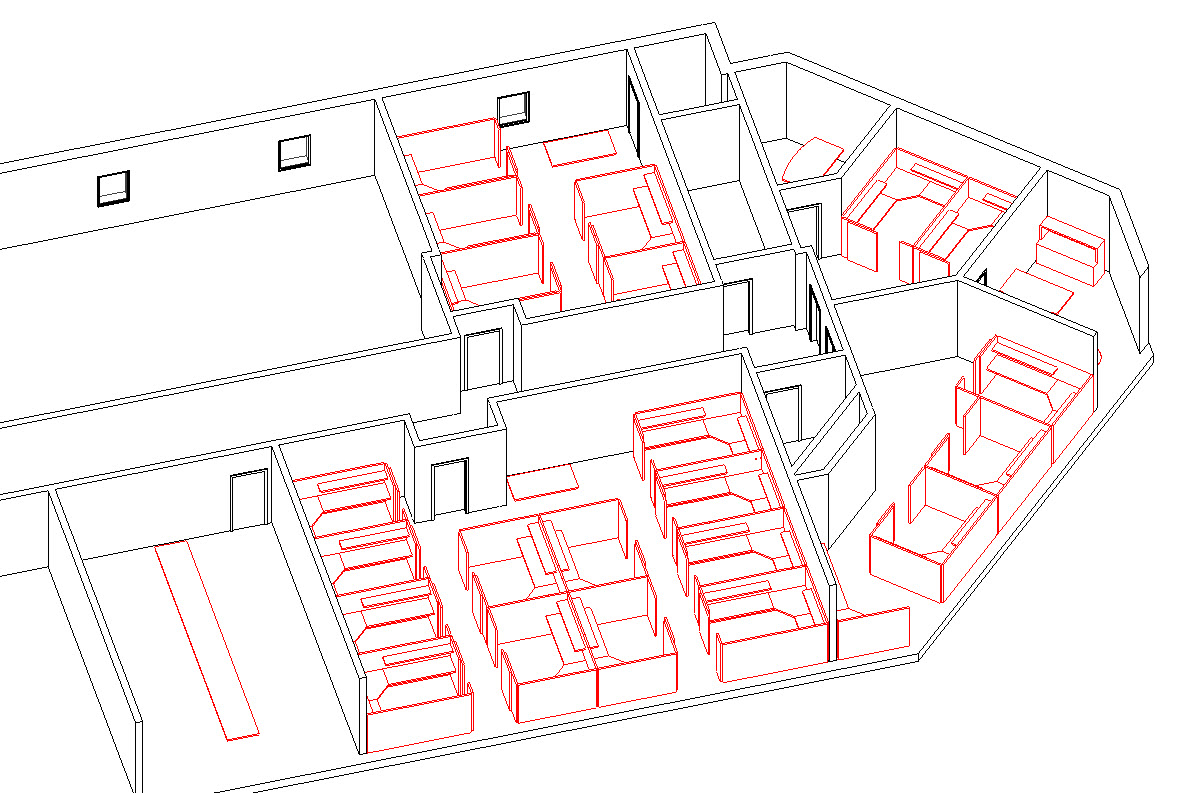
Hither is an example of a linked role piece of furniture layout in a Revit projection, shown in red.
Now that the SketchUp model is linked into the Revit project…
- Yous tin snap to the linked model with Revit'south drawing and measuring tools
- The linked model can be developed further in SketchUp and continually reloaded into Revit by updating the link
- SketchUp's tags/layer volition become link "layers" that can be controlled with Revit'southward visibility graphics
- Large models as links tin exist toggled on/off per view or view template
- You tin collaborate with SketchUp designers or production team members with no Revit noesis
SketchUp as an IFC Export
This arroyo allows for the integration of model elements into the Revit projection for the purpose of coordination and collaboration.
SketchUp every bit an IFC Export Apply Case
Detailed SketchUp Model
SketchUp is used to create a detailed model. The model is used in Revit for connected development and notation with express rework needed.
Reference or Consultant Model
A SketchUp model is used in Revit for third party collaboration and coordination. Model object brandish & visibility options are controlled at the Revit family level.
SketchUp as an IFC Export Workflow
-
Within SketchUp, all the geometry must exist made into private groups or components.
Tips for the all-time results:
- Elements should be true 3D objects and made watertight. For example, walls should non exist single planes. Instead, they should be drawn as "thick" walls with actual dimensions.
Tip: You can make up one's mind if a grouping/component is water tight in the Entity Info dialog. If the dialog states a volume, the group/component is water tight. The Entity Info dialog volition also state upon selection of an object 'Solid Group' or Solid Component' to determine if the selected object is watertight. In that location are SketchUp extensions that can help you validate your group/component and even help fix any issues. One extension to effort is Solid Inspector (Free)
- If at all possible, typical wall systems should be grouped equally straight segments. Revit does non correctly translate IFC walls that comprise returns or height offsets and may affect the ability to host Revit families.
- If you are wanting SketchUp materials to transfer into Revit through the use of IFC, materials must exist applied to the group/component. Materials applied to raw geometry will not transfer in the IFC consign.
Tip: There are SketchUp extensions such every bit ProfileBuilder3 (Paid) and Unproblematic Tool (Complimentary) that can facilitate the creation of watertight and straight walls systems perfect for this use case.
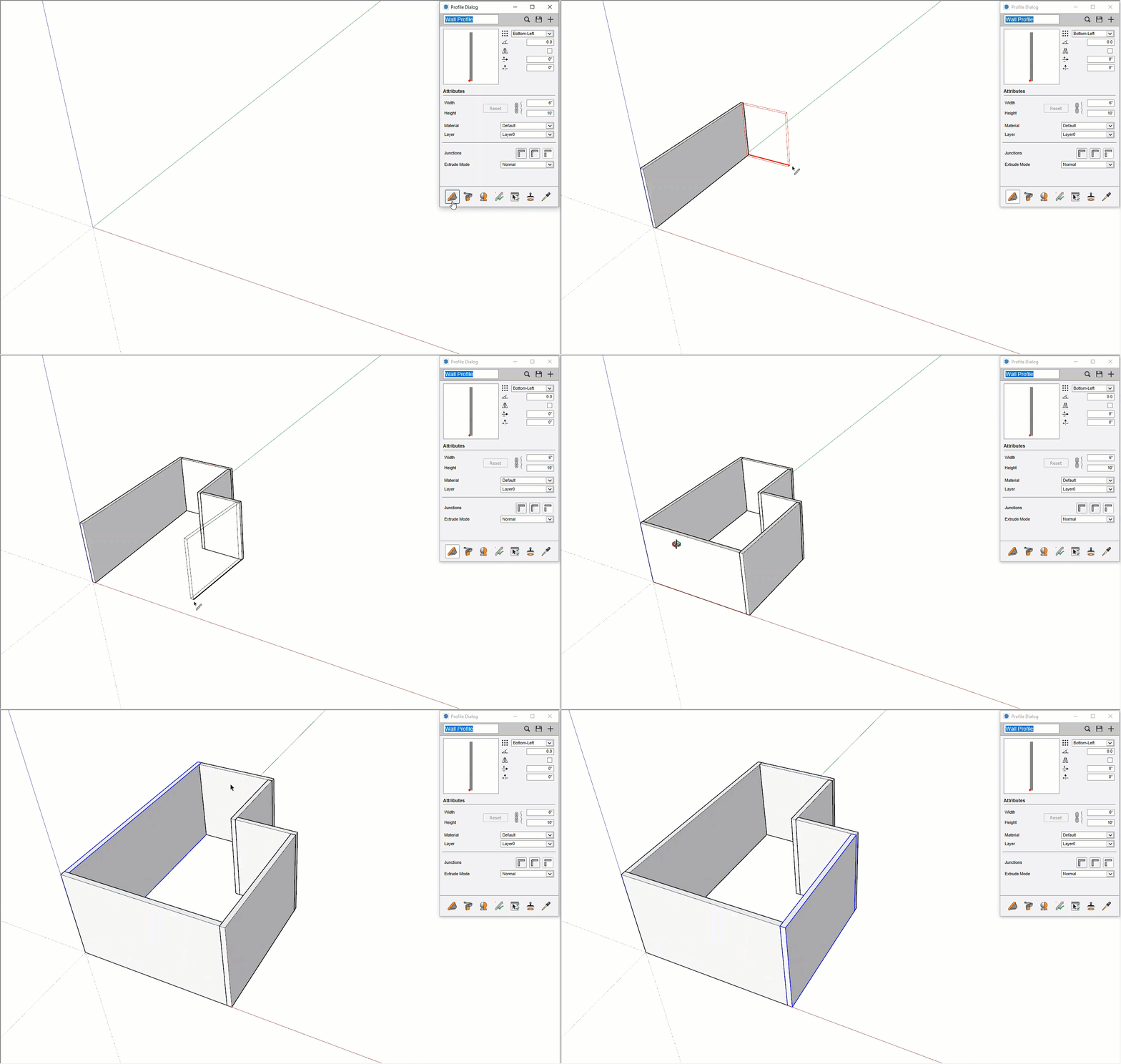
ProfileBuilder3 cartoon a wall system with a return - Elements should be true 3D objects and made watertight. For example, walls should non exist single planes. Instead, they should be drawn as "thick" walls with actual dimensions.
- Allocate all the components and groups every bit IFC objects. This can exist washed while yous are creating a component, through the Entity Info dialog, or by using the SketchUp Classifier carte/tool.
Tip: Learn more nearly assigning IFC classifications here -
Classifying objects - Export the model as an IFC file (File > Export > 3D Model… select 2x3 IFC file type).
- Within Revit, select File > Open > IFC… and select the IFC file.
Results: SketchUp groups/components that have been assigned an IFC classification volition become Revit "In-Place" components with the correct Revit Family unit classification (i.due east IFCWall = Revit Wall).
Equally an "In-place" component, you are able to…
- Host windows, doors, and face based families
- Tag and schedule families
- Filter past Revit family unit blazon
- Edit the family
- Employ cutting in plans, sections, and elevations
- Input "Identity Data" (Select Family → Edit Type)
Please Note:
- Although the "In-Place" component has a Revit family unit classification, y'all volition not be able to change it to a native Revit assembly type.
- Doors will only insert at a Revit Level - y'all must create Revit levels to accomplish this.
Revit to SketchUp: Approaches & Workflows
Information technology can be advantageous to export Revit models to SketchUp for client feedback and easy model manipulation for charrettes, design reviews, and stakeholder presentations.
Revit to SketchUp Use Cases
There are many reasons a user would want to view Revit geometry within SketchUp. The post-obit are merely a sample of the use cases where Revit created geometry viewed in SketchUp can assistance further develop a project.
- Create compelling visuals for public facing blueprint presentations
- Develop shading and solar studies
- Perform material studies
- Create complicated geometry that is difficult to create natively in Revit
- Add detail to a model
- Perform faster changes on the fly to expedite the testing of design options
- Perform quick collaboration with non-AEC stakeholders
- Create a lighter model for fly-throughs and animations
- Create piece of furniture and fixture layouts using 3D warehouse
Principal Approaches
In that location are multiple means to bring your Revit model or elements of the model into SketchUp, including DWG, DXF, and IFC. Nosotros accept targeted two approaches that a user can use to bring Revit projects into SketchUp.
Revit as a DWG Consign Workflow
- Within an open Revit Projection, select or create a 3D view. Once in a 3D view, select File > Export > DWG > Alter Export Setup (3 dots…) > Solids > ensure ACIS is selected...and finish the export.
- Within SketchUp, select File > Import (File blazon DWG) > Select the .dwg file… terminate import.
Results: Revit families become SketchUp components and tagged to the default CAD layer proper noun.
Once in SketchUp, y'all are able to treat the elements like normal SketchUp entities and manipulate and visualize as you see fit.
Delight Note:
- Revit volition only export what is visible in your 3D view. Turn off unnecessary families to ensure a clean and usable SketchUp model.
- The transition of materials to SketchUp tin be inconsistent and based on your export preferences. Preferences are controlled in the "Colors" tab in the Revit export setup. The virtually consequent method is to export by CAD Index Color and adjust the fabric once imported to SketchUp. During the import into SketchUp, click Options, and check the box for "Import Materials." The IFC Consign method is more than successful at transitioning shaded materials.
Here is an example of a DWG exported from Revit and viewed in SketchUp.
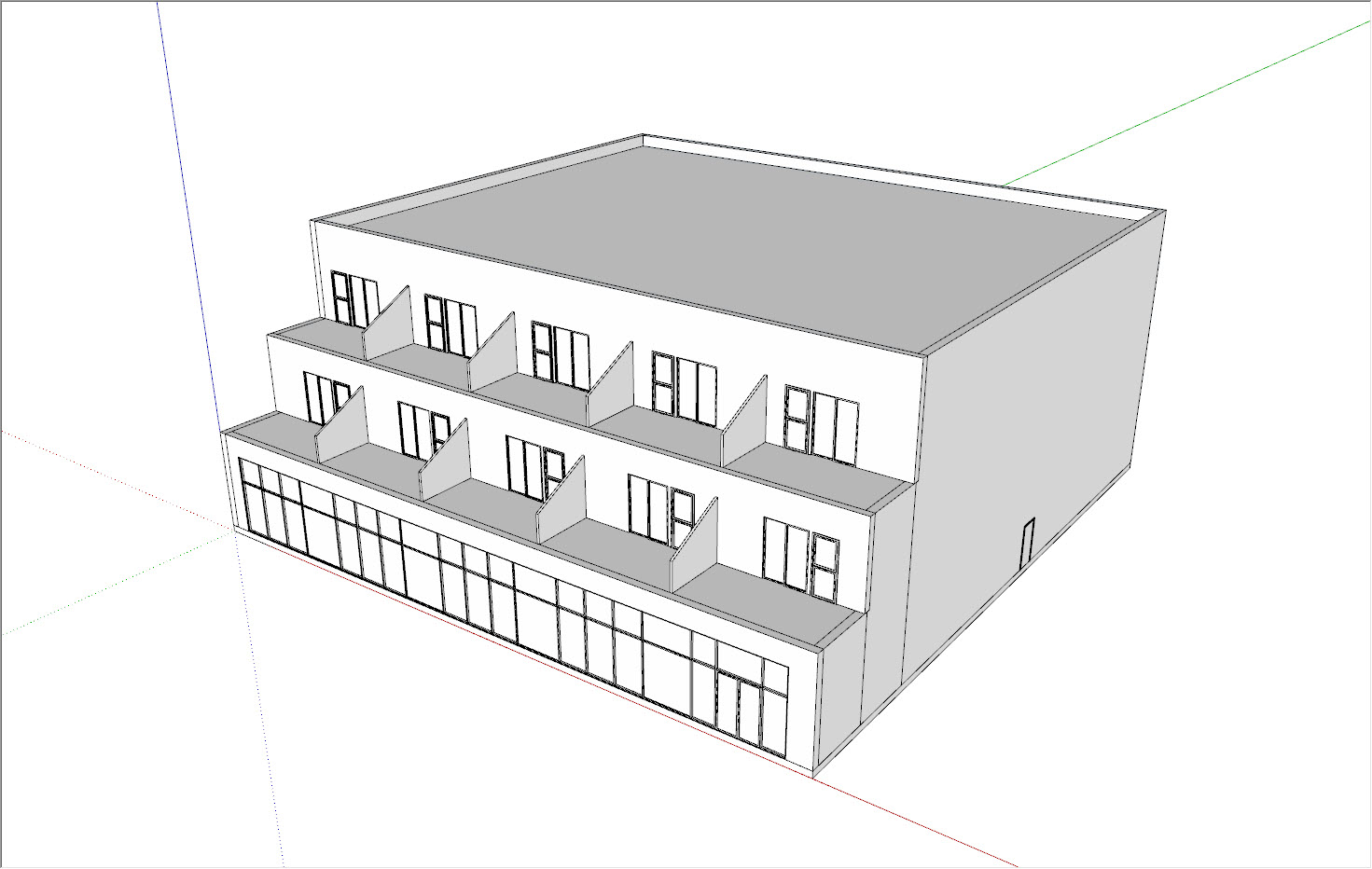
Revit as an IFC Export Workflow
- Within an open Revit Project, select File > Export > IFC...finish export.
- Within SketchUp, select File > Import (File blazon .IFC) > Select IFC file… terminate import.
Results: The Revit families are components in SketchUp and they will be assigned as Untagged and labeled appropriately in SketchUp's Outliner. The IFC classifications prepare in Revit will exist preserved on the individual components for possible hereafter re-consign as IFC.
In one case in SketchUp, you are able to treat the elements like normal SketchUp entities and dispense and visualize as you meet fit.
Please Note:
- Each Revit family instance becomes a unique SketchUp component due to Revit's schedulable parameters. For example, If there are 5 instances of the same door family unit in Revit tagged equally "A101-A105", that volition create 5 unique SketchUp components rather than five instances of the same component.
- Although shaded materials volition transfer to SketchUp, Revit's render material will not. The extension Material Replacer (Free) can help update the shaded material to a more than realistic material of your choosing if needed.
Tip: There are SketchUp extensions that can assistance cleanly import IFC to SketchUp, assign IFC classifications as Tags, and even help reduce geometry triangulation. Ane valuable extension to endeavour is IFC Manager (Free).
Hither is an example of an IFC file exported from Revit and imported to SketchUp.
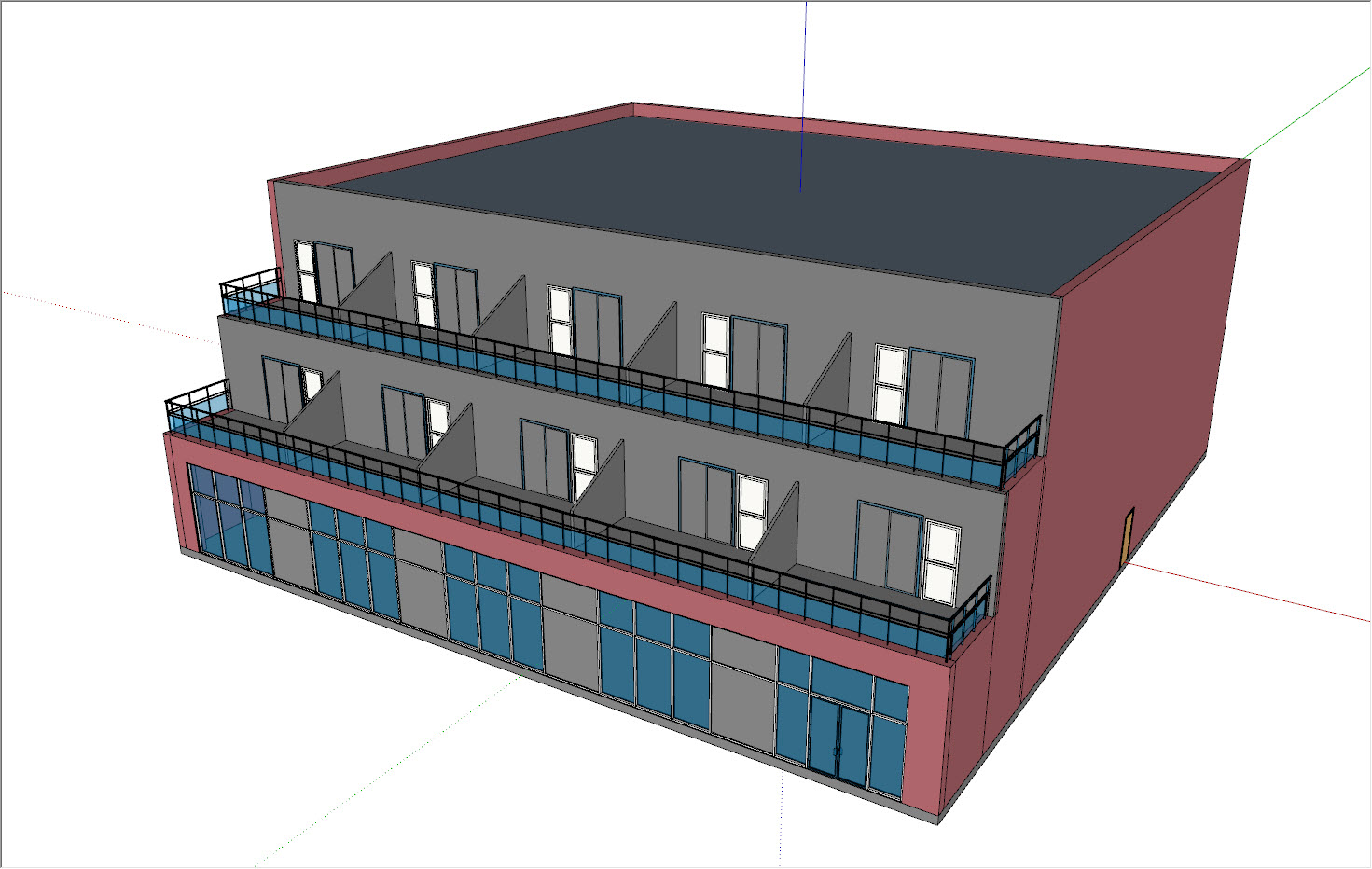
Revit to SketchUp: Extensions to Consider
Third party extensions and plug-ins may exist helpful depending on your workflow. Nosotros recommend researching their potential to brand your transition equally seamless as possible. The following Revit Add-ins might exist worth your consideration:
- rvt2skp
- SimLab SketchUp Exporter
- BIMDeX
vickeryhiciandold.blogspot.com
Source: https://help.sketchup.com/en/sketchup-to-revit
0 Response to "Why Uploaded File Layer Not Appearing in Revit"
Post a Comment